

- Arrive Delhi.
- Upon arrival, Welcome by Mr. Deepak Gupta and transfer to your hotel.
- Welcome Non-alcoholic welcome drink at hotel.
- In its 3000 years of existence; seven cities have risen where the present capital of India stands. Here you’ll encounter a fascinating blend of the ancient and the contemporary. Where government buildings, medieval palaces and bazaars exist beside a modern metropolis. Delhi is a city waiting to be explored.
- Overnight at Hotel. (Meals not Included)


• After breakfast, enjoy the sightseeing of Delhi.
• Drive past Red Fort (Closed on Mondays) the 17th century imposing fortress built in red sandstone is surrounded by a huge 33m high boundary wall. Inside are exquisite palaces and beautiful gardens.
• Opposite the Red Fort is Jama Masjid (Friday Mosque) made of red sandstone and white marble, completed in 1656 at a cost of one million Rupees has perfect proportions. Jama Masjid is India’slargest mosque where more than 20.000 people can kneel in prayer. The interior of the prayer hall is divided into aisles by arches. The walls and floors are of marble inlay panels.
• Also, enjoy the Rickshaw Ride in the bazaars of Old Delhi.
• Also visit the Raj Ghat on the banks of the river Yamuna, Mahatma Gandhi’s Memorial, where he was cremated following his assassination in January 1948. The memorial lies in the midst of landscaped gardens and made of a simple square platform of black marble inscribed with his last words “Hey Ram”.;An eternal flame burns 24 hours.
• You will drive Past Rashtrapati Bhawan once the Viceroy’s residence is now the official residence of the President of India.;
• Photo stop at India Gate Built of Bharatpur stone, commemorates the 70,000 Indian soldiers who died in the 1st world war. 13516 names of British and Indian soldiers killed in the Afghan War of 1919 are engraved on the arch and foundations.
• Visit the Humayun’s Tomb, built by his wife Haji Begum in the 16th. Century. An early example of Mughal architecture considered the predecessor of the Taj Mahal.
• Visit the Qutub Minar, built by Qutub-ud-din Aibek in 1199 and it is one of the tallest minaret in India (73 meters height). It is made from red sandstone & marbles.
• Overnight at the hotel.


- Breakfast at the hotel.
- Check out from hotel and drive towards Agra.
- Arrive Agra check in hotel.
- Then visit Taj Mahal (closed on Friday), the most famous monument of India, classified by Unesco in 1983. This graceful and moving mausoleum was built by Emperor Shah Jahan, “King of the World” in memory of his beloved wife Mumtaz Mahal, who died in 1631 at the birth of their 14th child. Begun in 1631, the Taj Mahal was not completed until 1653. The best workers were recruited from all over India and Central Asia, the Bordeaux artist, Venice participated in its decoration.
- Then, visit Agra Fort (1565-1573). This huge red sandstone fortress was begun by Emperor Akbar. Standing majestically on the banks of the Yamuna, it presents itself as a scholarly combination of power and elegance. This is where Shah Jahan ended his days, sadly contemplating his marble dream. On the other bank of the river further north stands the delicate mausoleum of Itimad-ud-Daulah, all marble with inlays of semiprecious stones, which prefigures the style of the Taj, begun four years later.
- OPTIONAL: Evening you can witness the “Mohabbat-te-taj” Show in Agra The Sanskritik Natyashala presents ‘Mohabbat-the-Taj’ – a series of play depicting the saga of love. The true and immortal love of Shajahan for Mumtaj Mahal- his beautiful wife; the lavish lifestyle of mughal era; emaculate hardship of the artisans for 22 years that created the most precious specimen of craftsmanship… ‘Mohabbat-the-Taj’ at ‘Kalakriti is exceptionally inviting. The effort to hold up the cultural and historical legacy of India is worth a glance. So, be with us to witness the Indian heritage come alive.
- Overnight at the hotel.


- After breakfast, drive to Bharatpur.
- En route visit Fatehpur Sikri to visit the magnificent fortified ghost town. Capital of the Mughal empire at the time of its splendor between 1571 and 1585, the city was quickly abandoned and remained “as is”, without being looted or destroyed. It is a very interesting testimony, both historically and architecturally, a brilliant Mughal city. You will admire including the Great Mosque with the tomb of Salim Chishti Skeikh the magnificent marble lattice, home of Jewels also called Diwan-I-Khas (audience hall) with the pillar of Akbar and the giant chessboard of the court the Pachhis.
- Continue drive towards Bhartpur.
- On arrival in Bharatpur, transfer to the railway station to board a train for Ranthambore.
- Departure by (Train No: 12060 Kota Janshatabdi Departure at(1546 Hrs – Arrive 1802 Hrs)
-
RANTHAMBORE – Ranthambore National Park is one of the largest and most famous national parks in North India. It is named after the historic Ranthambore fortress that is found within the park. The park covers an area of 392sq Km. Bound to the north by the Banas River and to the south by the Chambal River, Ranthambore lies at the edge of a plateau. There are several lakes here and it is home to a variety of plants and animals. However, Ranthambore’s pride is the population of tigers prowling in their own natural habitat. The other fascinating wildlife, you can see include Leopards, Striped Hyenas, Chital, Chinkara, Sambhar deer, langurs, Civets, Macaques, Sloth bears, Black bucks, Indian Wild Boar, Five-striped Palm Squirrels, Indian Flying Foxes and mongoose to name a few with. A visit to Ranthambore National Park can surely be a rewarding experience for all wildlife enthusiasts.
- On arrival in Ranthambore, transfer to hotel.
- Dinner & Overnight at the hotel.
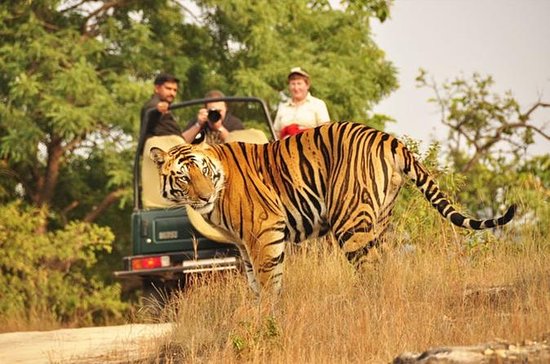
- Enjoy morning shared jeep safari in Ranthambore National Park.
- After safari return back to hotel for breakfast.
- Enjoy lunch in the hotel.
- Afternoon enjoy another Shared jeep safari to Ranthambore National Park.
- Dinner and Overnight at the hotel.


- Breakfast at the hotel.
- Check out from hotel and drive towards Bundi.
- BUNDI – It is one of the unexplored cities of Rajasthan with a rich historical wealth. Once a part of Kota, it was ruled by the Hada Chauhans- an offshoot of the famous Chauhan clan who ruled Delhi and Ajmer. Bundi is surrounded by the Aravali hills on the three sides and is circumscribed by a massive wall with four gateways. Interesting monuments including impressive medieval forts, palaces, havelis, temples with beautiful stone idols and chattris with carved pillars, along with a picturesque lake in the heart of the town, add to its charm. Bundi is very famous for its intricate carvings and murals.On arrival in Bundi, transfer to hotel.
- Later, enjoy the visit of Taragarh Fort – This imposing fort was raised at a height of 500 meters atop a hill by Rao Bar Singh in the 13th century. Strong bastions the biggest being Bhim Burj, rise above the chain of palaces built by different rulers over a period of time. Striking features of the fort are the Chhatra Mahal, Badal Mahal and Ratan Daulat – Diwan-I-Aam, built by Rao Raja Ratan Singh (1607-31). The famous Chitrashala, built by Rao Raja Umed Singh (1739-70) has open galleries running around it and have the best of Bundi wall painting depicting the Raas Leela, court life and beautiful women
- Overnight at hotel.


- After breakfast enjoy an excursion of Kota and enjoy the visit of Kota including following:
- Visit Garh Palace – The foremost tourist attraction in Kota is the ‘Garh Palace’. This large complex, also called the City Palace is built in a predominantly Rajput style of architecture. The palace is a rambling complex of suites and apartments built by different rulers at different times. The museum within the city palace is worth visiting, as it houses a good collection of artifacts.
- Visit Kota Govt. Museum –Kota Government Museum is a very famous tourist attraction of Kota which is situated nearby Kishore Sagar Lake in the Brij Vilas Palace. The museum has a special collection of Hadotio statues, old coins and old manuscripts. Among all the sculptures exhibited here, the statue brought from Baroli is the most incredible one. It is an elegant and beautifully carved piece of artwork. Some of the statues present here are quite old and date back to the 4th century. The manuscripts and the paintings displayed in the museum speak volumes about the creative minds of people from the medieval era. Besides all this, visitors can also see beautiful costumes and handicrafts in the museum. This Museum also has an image of 3rd century Yupa pillars which displays the famous Vedic rites and Vardhaman, Ramgarh dancing pair. Most of the ancient statues and sculptures of the museum dates back to the 4th century Gupta period.The manuscript and painting sections display a number of works of medieval Indian culture such as miniature paintings, astronomical, astrological and Vedic works. Also, a variety of apparels, handicrafts, costumes and royal clangs are displayed in this museum. A very beautiful and large statue of Shesh Sayi Vishnu which was brought from Baroli is a very wonderful statue on display in the Museum.
- After visit drive back to Bundi.
- Dinner & Overnight at Hotel

- After Breakfast Drive towards Udaipur.
- En Route – Visit of Chittorgarh Fort – One of the most formidable forts in India, Chittorgarh Fort is the symbol of the Rajput valiancy and supreme sacrifice. Standing majestically on a steep180 m high hill, the massive Chittorgarh Fort is approachable through a 1 km long zigzag road. The road leads through seven gates to the main gate Rampol. There are various impressive sections inside the fort, namely, Vijay Stambha (Tower of victory), Kirti Stambh (Tower of fame), rana Kumbha Palace, Padmini Palace and Kalika Mata Temple.
- After visit drive Udaipur.
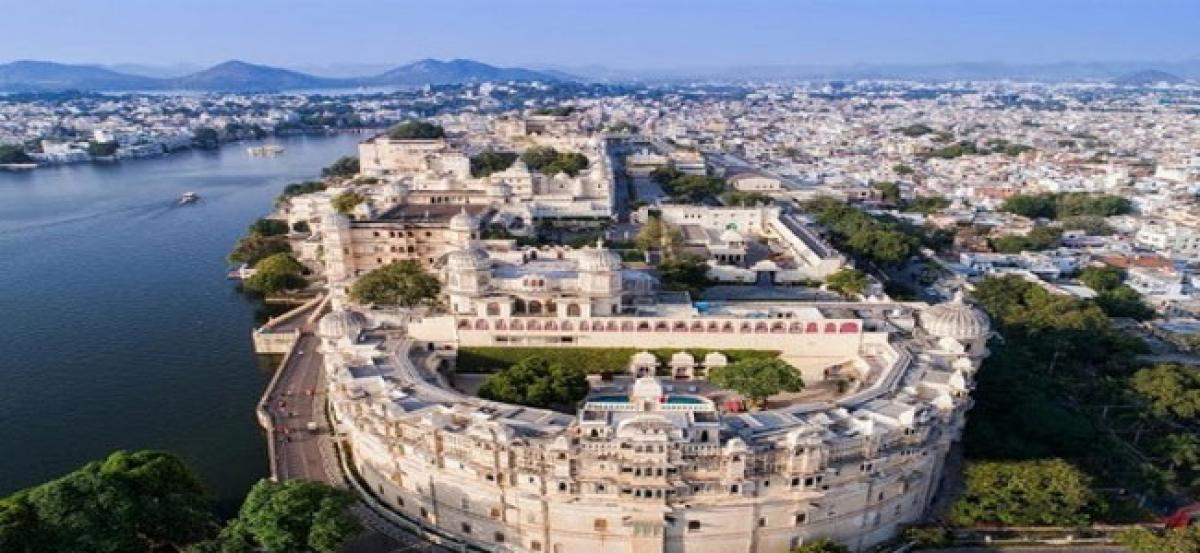
- UDAIPUR –The “City of Lakes” was founded in 1559 AD as capital town of the former Mewar state by Maharana Udai Singh on the eastern banks of the Lake Pichola. The rich cultural, social and natural heritage, aesthetic beauty and ecological richness, so far preserved through the surrounding lakes, serene and opulent hilly range of the Aravalis and lush green vegetation and pleasant gardens and harmonious built forms present a unique condition of scenic beauty. The magical beauty of Lake Pichola allures the visitors again and again.
- On arrival in Udaipur, transfer to hotel
- Overnight at hotel.


- After breakfast, enjoy visit of the following:
- City Palace – City Palace towers over the Pichola Lake. Maharana Udai Singh initiated the construction of the palace but successive Maharanas added several palaces and structures to the complex but retained remarkable uniformity in the design. The entry to the Palace is from the Hathi Pol, the Elephant Gate. The Bari Pol or the Big Gate brings you to the Tripolia, the Triple gate. It was a custom to weigh the Maharaja under this gate in gold and silver, which was distributed to the populace. Balconies, cupolas and towers of the palace give a wonderful view of the lake.
- After the visit of the Palace, enjoy a 45 Minutes’ walk through the old city. The walk will start at the Tripolia Gate of the City Palace. This part of the Bazaar is full of small shops on both sides of the road selling Handicrafts.
- Further down the road, there is a very famous Hindu temple called Jagdish Temple. The Temple is dedicated to Lord Vishnu, the preserver of the Universe. We continue our walk down the road towards the Clock Tower where you will see many interesting local shops selling different articles of day-to-day requirements.
- From Clock Tower we turn in to the Silver market, where you will see many shops selling Silver Jewellery and articles. Further down the road are shops for handmade shoes, which are typical of the region. You can buy some of the typical embroided shoes called Jutties.
- At the end of the road, you will enter the vegetable market square; you will see many ladies sitting around bamboo baskets, which are used by the vegetable vendors to display the Fresh vegetables. The walk will end at Vegetable market.
- After this interesting walk, visit Sahelion ki Bari: The Garden was built in early 18th century AD as a retreat for ladies of the royal household to spend their time in leisure. The enchantingly beautiful Garden is famous for its lotus pool, fountains (in the shape of birds), lush green lawns, flowerbeds, and marble pavilions,
- At sunset enjoy public boat ride on Lake Pichhola – It is one of the most beautiful and picturesque lakes of Udaipur. Located in the heart of the city, it is the oldest and one of the largest lakes of Udaipur. In 1362, it was built by Pichhu Banjara during the ruling period of Maharana Lakha. Talking about the dimensions of Pichhola Lake, it is extended to 3 miles in length, 2 miles in width and has depth of 30 feet. Pichola Lake is enveloped by lofty Palaces, temples, bathing ghats and elevated hills on all its sides.
- Overnight at hotel.


- After breakfast, drive to Kumbhalgarh. On the way enjoy visit of Ranakpur Jain Temples – Beautifully sculptured Jain temples mark the glory of this renowned place. Considered as one of the five holy places for the Jain community, these were created in the 15th century during the reign of Rana Kumbha. These are enclosed within a wall. The central Chaumukha [four faced temple] is dedicated to Adinathji. The temple is an astounding creation of architectural splendour with 29 halls and 1,444 pillars all distinctly carved, no two pillars being alike.
- On arrival in Kumbhalgarh, transfer to the hotel.
- Later Visit Kumbhalgarh fort – The fort that has made its mark in history as the second largest wall after the Great Wall of China – it is none but the Kumbhalgarh fort in Rajasthan. The mighty fort is 3600 ft tall and 38km long that surrounds the area of Udaipur. It was considered to have been built by Rana Kumbha in the 15th century. The fort is further declared a UNESCO World Heritage Site that is under the group Hill Forts of Rajasthan. It is located strategically on the western Aravalli hills.
- Overnight at hotel.


- After breakfast, drive straight to the starting point of our walk – the 10th century “Jain” temple called Muchhala Mahavir. Arrive Muchhala Mahavir. The distinctive feature of this temple is the statue of Lord Mahavira with a “moustache”. The two statues of elephants guarding the gateways are splendid examples of temple decoration. Traditionally known, as Jain Dharma, Jainism originated in Ancient India. The Jains follow the teachings of Tirthankaras, which can be literally translated as Prophets. Jainism stresses spiritual independence and equality of all life with particular emphasis on non-violence. The Jains have an ancient tradition of scholarship. The Jains are the best-educated religious community in India and the Jain libraries are India’s oldest. As the Jains are strict vegetarians, one is not allowed to take anything made of leather into a Temple. Shoes, Belts etc would have to be left out of the Temple.
- After the visit of the Temple, start the walk at around 1030 hrs.
- We start our walk towards “Thandi Beri”. About 10 minutes into our walk, we come across the village of a Tribe called “Garasiya”. Rajasthan, the land of robust maharajahs and ambrosial Maharanis, also houses a divergent colony of traditional tribes, who constitute around 12 % of the state’s population, roughly double the country’s average. Due to the Aryan invasion in Ancient India, the Tribals were cornered into the Aravalli Ranges in Rajasthan, where they reside today with their own social system and customs. The tribes share common characteristics, which seem to articulate their past together, but it is the idiosyncrasy in their costumes and jeweler, fairs and festivals that set them apart from one another. As all members of the clan are believed to be related to one another, marriages are generally arranged outside the community. With a very low literacy rate, many of these destitute folks have religion and victuals, closely related to Hindu customs.
- The Gharasiyas are Sheep Herders living in small villages. We will walk through one such village and will be able to see the lifestyle of these tribes from very close quarters. Continue your walk on a narrow trail crossing a small stream on the way. Gradually the Forest around you gets dense. After about 40 minutes you will reach a small Hindu Temple in the middle of nowhere. Hinduism originated in the Indian subcontinent and about 80% of Indians are Hindus. With its origins in the Vedic civilization it has no known founder, being itself a conglomerate of diverse beliefs and traditions. It is the world’s oldest existing religion and has approximately a billion adherents, of whom about 905 million live in India and Nepal. This makes it the world’s third largest religion after Christianity and Islam. Walk another 20-25 minutes to a man made water body called “Thandi Beri”. From Thandi Beri walk back to Muchhala Mahavir and then drive back to your hotel.
- Overnight at hotel.

- After breakfast drive towards to Deogarh.
- After the visit of the Temple, start the walk at around 1030 hrs.
- DEOGARH – It is situated about 135 Kms north-east of Udaipur. ‘The Rawat’, chief of Deogarh, was one of sixteen umraos (feudal barons) entitled to wait upon the Maharana of Udaipur, the capital of Mewar. These type of feudal estates, called ‘Thikanas’ were sanctioned by the ruling Maharana to a nobleman either due to blood relationship or for an act of bravery. The main attraction of Deogarh is Deogarh Mahal which is a heritage hotel, originally built in the 17th century and now converted into a heritage hotel offering an unforgettable experience & a comfortable stay. It stands atop a hill and offers a commanding view of the surrounding mountain range and the numerous lakes, strewn across the countryside.
- On arrival in Deogarh, transfer to hotel.
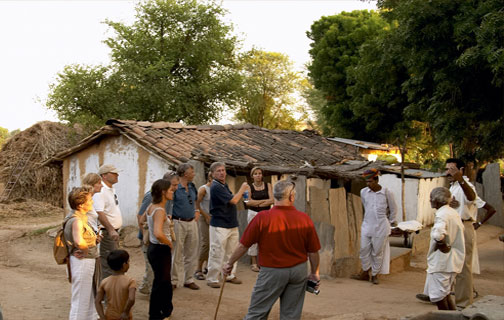
- Later, enjoy Deogarh Village walk – Enjoy the visit to Deogarh Village and watch villagers performing their day to day activities. Watch women around a community well fetching water buckets, washing clothes and carrying water in beautiful matkas (clay pot) on their heads. Feel free to join the group of people sitting under some shady trees or in open courtyards discussing everything from the world of politics to the local domestic issues. We will also have a round to village market where we will see various small shops.
- Overnight at hotel.
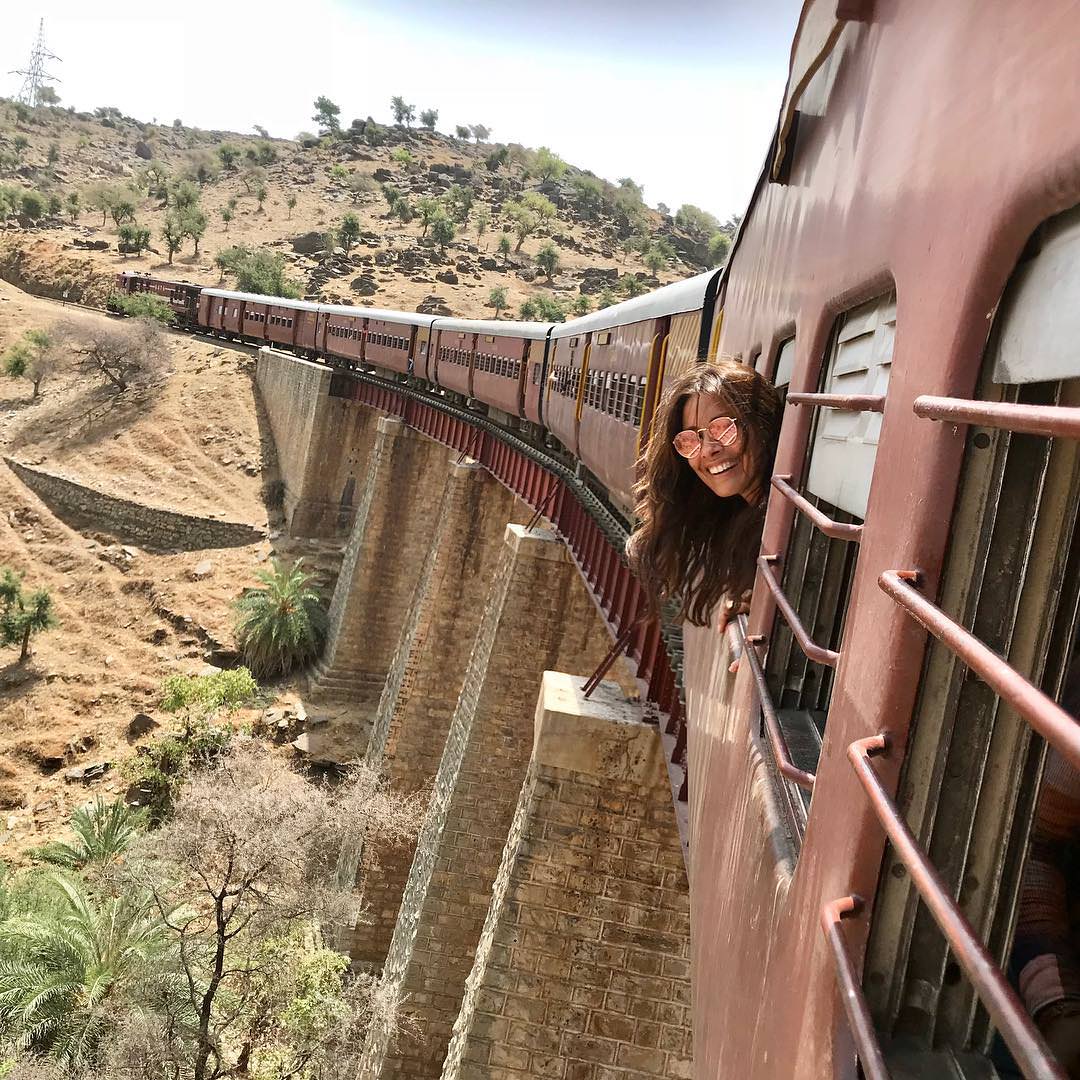
- After breakfast enjoy the Rural Train ride.
- Phulad Train – Ride on the local meter gauge train, down a mountainous Ghat section is interesting for its panoramic views and of the scrub jungle, hills, tunnels 100 – foot high bridges and Remote one-man stations. One travels on the Ghat section and here the hundreds of monkeys descend from the forest trees to feed on handouts given by the villagers. One gets to see the real rural life in this Train. Talking to villagers and co-passengers can be really interesting sometimes.
- After the Ride, Drive towards Pushkar.
- Dinner & Overnight at the hotel.


- After breakfast, enjoy visit of Pushkar including the following:
- Pushkar Lake – The pious Pushkar Lake is believed to have been created by the falling of a lotus from the hand of Lord Brahma. It is said to be as old as the creation itself. The lake is considered as one of the most sacred spots. The devotees believe that one dip in the waters of the lake on Kartika Poornima is equivalent to performing yagnas for several hundred years.
- Lord Brahma Temple – This is the only existing temple dedicated to lord Brahma and was constructed in the 14th century, standing on a high plinth with marble steps leading up to it. A beautiful carved silver turtle sits on the floor facing the sanctum or Garbha Griha. The marble floor around the silver turtle is embedded with hundreds of silver coins, with donors’ name engraved on them.
- After the sightseeing, enjoy the following activities:
- ROSE WATER DISTILLERY – Pushkar was the largest producer of roses at one time and still produces one of the best quality rose water in the world. Distillation is still done by the conventional method best quality rose water in the world. Distillation is still done by the conventional method.
- Also, enjoy visit of local artisans & village settlements – The guests can opt to visit any of the manyartisans at work in the area.
- Dinner & Overnight at the hotel.


- After breakfast drive to Jaipur.
- JAIPUR – The fascinating capital of the marvellous state of Rajasthan. Jaipur is popularly known as the Pink City, thanks to the colour of its buildings. It was built in 1727 A.D by Maharaja Sawai Jai Singh II, followed a grid system, which made it the only planned city of its time. A young Bengali architect Vidhyadhar Bhattacharya designed the city in accordance with Shilp Shastra – an ancient Hindu treatise on architecture. There are innumerable sagas and stories of culture, traditions, practices and valour. This diverse land of rich cultural heritage is a royal treat for tourists all over the world.
- On arrival in Jaipur, transfer to the hotel.
- In the afternoon enjoy Rickshaw Ride and walk in the old town – It takes you through the narrow by lanes of Jaipur, through the hussle & Bustle of the Old bazzare (Market). The humble cycle rickshaw is not only the common man’s beast o the burden, but it also serves to generate considerable employment. Most of all however, in an age when our cities are beset by the pollution menace of the automobile, it provides perhaps the only viable alternative for the short haul (say, 5 kms). However in the present context we shall offer this ride as a nostalgic trip.
- 01 special dinner at Narain Niwas Palace Hotel with Rajasthan cultural dance show. Overnight at the hotel.


- Post breakfast.
- Visit Amber Fort with Elephant or Jeep ride. The Amber Fort was built in 1592 by Raja Man Singh, is one of the finest examples of Rajput architecture. It gives extensive views over a deep narrow valley and the wider plains beyond.
- Afternoon, visit City Palace. The beautiful palace was built by Maharaja Sawai Jai Singh during his reign. Among the various forts and palaces of Jaipur, City Palace stands apart, with its outstanding art and architecture. City Palace complex covers a huge area, which is divided into a series of gardens, courtyards and buildings. The premises consists several buildings like Chandra Mahal, Mubarak Mahal, Mukut Mahal, Maharani’s Palace, Shri Govind Dev Temple and the City Palace Museum.
- Also visit Jantar Mantar (1728-34) by king astrologer Jai Singh II. The instruments are built of stone with marble facing on the important plains for measuring the harmony of the heavens. Each instrument serves a particular function and each gives an accurate reading.
- Make a photo stop at the palace of winds the Hawa Mahal. A 5 storied building with 25cm thick facade from the 18 century having 953 windows and niches so that ladies of royal family could see the procession and events in the city without being visible to the people.
- Evening witness the Bollywood movie at famous cinema hall « Raj Mandir ». One of the most beautiful cinema hall in the world and the largest in Asia with 1125 seats.
- Overnight at the hotel.

- Breakfast at hotel and check out.
- After that its a time to say « Good Bye » and transfer to international airport.
-
END OF OUR SERVICES