

- Arrive Delhi.
- Upon arrival, Welcome by Mr. Deepak Gupta and transfer to your hotel.
- Welcome Non-alcoholic welcome drink at hotel.
- In its 3000 years of existence; seven cities have risen where the present capital of India stands. Here you’ll encounter a fascinating blend of the ancient and the contemporary. Where government buildings, medieval palaces and bazaars exist beside a modern metropolis. Delhi is a city waiting to be explored.
- Overnight at Hotel. (Meals not Included)


• After breakfast, enjoy the sightseeing of Delhi.
• Drive past Red Fort (Closed on Mondays) the 17th century imposing fortress built in red sandstone is surrounded by a huge 33m high boundary wall. Inside are exquisite palaces and beautiful gardens.
• Opposite the Red Fort is Jama Masjid (Friday Mosque) made of red sandstone and white marble, completed in 1656 at a cost of one million Rupees has perfect proportions. Jama Masjid is India’s largest mosque where more than 20.000 people can kneel in prayer. The interior of the prayer hall is divided into aisles by arches. The walls and floors are of marble inlay panels.
• Also, enjoy the Rickshaw Ride in the bazaars of Old Delhi.
• Also visit the Raj Ghat on the banks of the river Yamuna, Mahatma Gandhi’s Memorial, where he was cremated following his assassination in January 1948. The memorial lies in the midst of landscaped gardens and made of a simple square platform of black marble inscribed with his last words “Hey Ram”. An eternal flame burns 24 hours.
• You will drive Past Rashtrapati Bhawan once the Viceroy’s residence is now the official residence of the President of India.
• Photo stop at India Gate Built of Bharatpur stone, commemorates the 70,000 Indian soldiers who died in the 1st world war. 13516 names of British and Indian soldiers killed in the Afghan War of 1919 are engraved on the arch and foundations.
• Visit the Humayun’s Tomb, built by his wife Haji Begum in the 16th. Century. An early example of Mughal architecture considered the predecessor of the Taj Mahal.
• Visit the Qutub Minar, built by Qutub-ud-din Aibek in 1199 and it is one of the tallest minaret in India (73 meters height). It is made from red sandstone & marbles.
• Dinner & Overnight at the hotel.


- Breakfast at the hotel.
- Check out from hotel and drive towards Agra.
- Arrive Agra check in hotel.
- Afternoon, visit Agra Fort (1565-1573). This huge red sandstone fortress was begun by Emperor Akbar. Standing majestically on the banks of the Yamuna, it presents itself as a scholarly combination of power and elegance. This is where Shah Jahan ended his days, sadly contemplating his marble dream. On the other bank of the river further north stands the delicate mausoleum of Itimad-ud-Daulah, all marble with inlays of semiprecious stones, which prefigures the style of the Taj, begun four years later.
- Dinner & Overnight at the hotel.
- OPTIONAL: Evening you can witness the “Mohabbat-te-taj” Show in Agra The Sanskritik Natyashala presents ‘Mohabbat-the-Taj’ – a series of play depicting the saga of love. The true and immortal love of Shajahan for Mumtaj Mahal- his beautiful wife; the lavish lifestyle of mughal era; emaculate hardship of the artisans for 22 years that created the most precious specimen of craftsmanship… ‘Mohabbat-the-Taj’ at ‘Kalakriti is exceptionally inviting. The effort to hold up the cultural and historical legacy of India is worth a glance. So, be with us to witness the Indian heritage come alive.
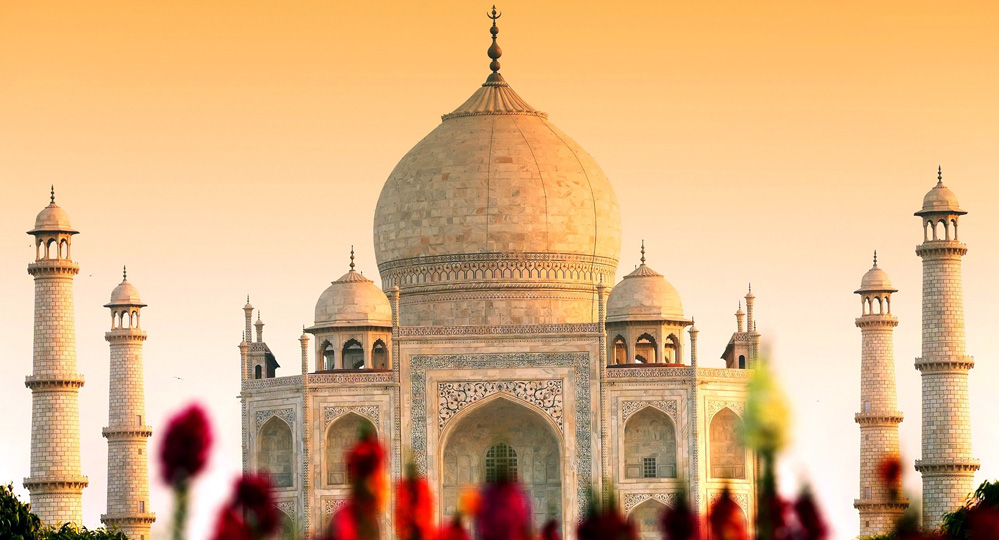

- Early morning at 6 a.m. Visit Taj Mahal (closed on Friday), the most famous monument of India, classified by Unesco in 1983. This graceful and moving mausoleum was built by Emperor Shah Jahan, “King of the World” in memory of his beloved wife Mumtaz Mahal, who died in 1631 at the birth of their 14th child. Begun in 1631, the Taj Mahal was not completed until 1653. The best workers were recruited from all over India and Central Asia, the Bordeaux artist, Venice participated in its decoration.
- Back to hotel and have breakfast. Check out of the hotel.
- Leave for Jaipur En route visit Fatehpur Sikri to visit the magnificent fortified ghost town. Capital of the Mughal empire at the time of its splendor between 1571 and 1585, the city was quickly abandoned and remained “as is”, without being looted or destroyed. It is a very interesting testimony, both historically and architecturally, a brilliant Mughal city. You will admire including the Great Mosque with the tomb of Salim Chishti Skeikh the magnificent marble lattice, home of Jewels also called Diwan-I-Khas (audience hall) with the pillar of Akbar and the giant chessboard of the court the Pachhis.
- Continue drive towards Jaipur.
- Rajasthan is a unique region in the world. Nowhere else will you find such a concentration of palaces, forts, temples and national parks. But what makes today its originality, is, undoubtedly, its hotel infrastructure. There we find some of the finest hotels in the world, in enchanting settings. This fabulous trip invites you to discover the high places of Rajasthan while staying in such hotels of dreams leave you, a lasting memory. Eight unforgettable days, in search of nirvana, in those places out of time! A wind of madness blows undoubtedly desert of Rajasthan to you to enjoy!
- Arrive Jaipur & check-in at hotel.
- 01 special dinner with Rajasthani cultural dance show.
- Overnight at hotel.


- Post breakfast, Visit Amber Fort with Elephant or Jeep ride. The Amber Fort was built in 1592 by Raja Man Singh, is one of the finest examples of Rajput architecture. It gives extensive views over a deep narrow valley and the wider plains beyond.
- Afternoon, visit City Palace. The beautiful palace was built by Maharaja Sawai Jai Singh during his reign. Among the various forts and palaces of Jaipur, City Palace stands apart, with its outstanding art and architecture. City Palace complex covers a huge area, which is divided into a series of gardens, courtyards and buildings. The premises consists several buildings like Chandra Mahal, Mubarak Mahal, Mukut Mahal, Maharani’s Palace, Shri Govind Dev Temple and the City Palace Museum.
- Also visit Jantar Mantar (1728-34) by king astrologer Jai Singh II. The instruments are built of stone with marble facing on the important plains for measuring the harmony of the heavens. Each instrument serves a particular function and each gives an accurate reading.
- Make a photo stop at the palace of winds the Hawa Mahal. A 5 storied building with 25cm thick facade from the 18 century having 953 windows and niches so that ladies of royal family could see the procession and events in the city without being visible to the people.
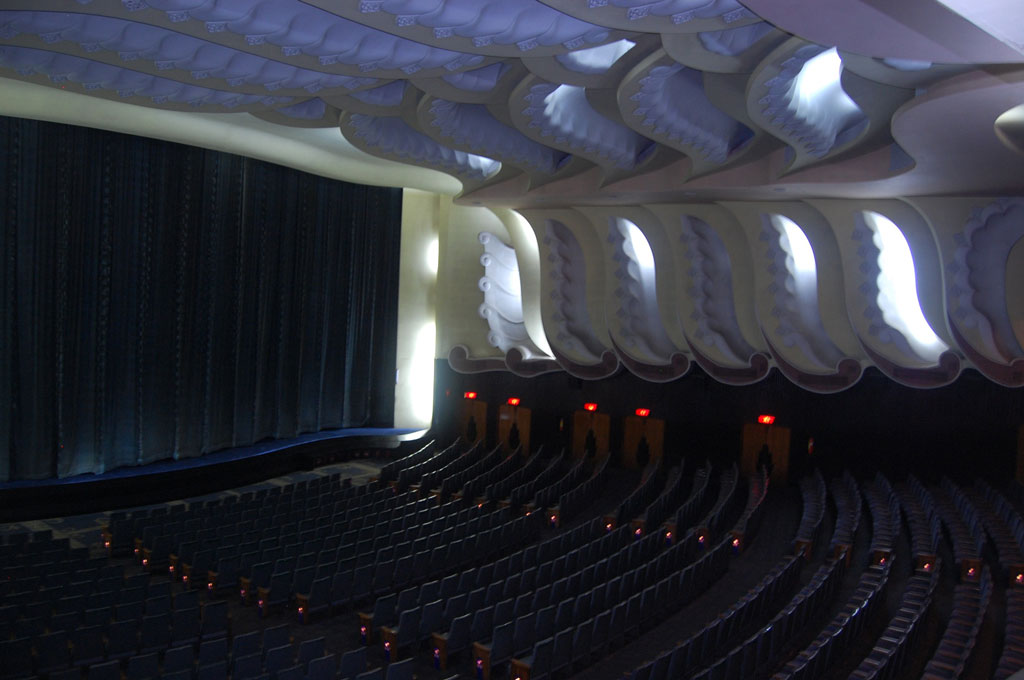
- Evening witness the Bollywood movie at famous cinema hall « Raj Mandir ». One of the most beautiful cinema hall in the world and the largest in Asia with 1125 seats.
- The foundation stone of Rajmandir was laid in 1966 by Shri Mohanlal Sukhadia (Chief Minister of Rajasthan). The building took its shape under the guidance of Shri Mehtab Chand Golcha. It took ten long years to build this large size, meringue-shaped auditorium and turning a dream into reality. This modern age marvel was inaugrated on 1st June 1976 Tuesday, by then Chief Minister of Rajasthan, Shri Hari Dev Joshi.Famous architect of that time Shri W.M. Namjoshi designed Raj Mandir in a Art Moderne Style (Streamline modern or late Art Deco). His creativity and Golcha’s and Surana’s perception began a new era in cinema. It was the time when architectural aspect was also given importance.It was the appeal and glamour of the Rajmandir that it was considered as the finest architecture building in the history of cinema halls and was given the title “Pride of Asia”.Interior and Exterior of this single screened talkie was done with great concern and care. With their elaborate superfluities and remarkable architecture, Rajmandir represents one of the most outstanding creativity. An architectural venture in itself, its each design is a remarkably splendid sample of unbelievable artistry, covering a sense of mystery, deception and art. Be it is the “Nine Stars” on the exterior of the Rajmandir or “revoloving panel” in interior, each has its own story and significance. While Nine stars on the exterior signifies the nine gem stone and highlights the occupation of the Surana’s Family, Sky format chandeliers graced with stars on its surrounding reminds the dreams of Shri Mehtab chand Golcha. All these are the perfect example of master craftsmanship and elegance.


- Breakfast at the hotel.
- Check out from hotel and drive towards airport to catch flight for Goa.
- Departure: Jaipur at: 0930 Hrs (Via Mumbai) Layover (02 Hours / 20 Min)
- Arrival: Goa at: 1510 Hrs
- Upon arrival, Welcome by Our representative and transfer to your hotel.
- Goa is a state in western India with coastlines stretching along the Arabian Sea. Its long history as a Portuguese colony prior to 1961 is evident in its preserved 17th-century churches and the area’s tropical spice plantations. Goa is also known for its beaches, ranging from popular stretches at Baga and Palolem to those in laid-back fishing villages such as Agonda.
- Dinner & Overnight at hotel.


- Breakfast at the hotel.
- Half City tour of Goa
- Goa is a state in western India with coastlines stretching along the Arabian Sea. Its long history as a Portuguese colony prior to 1961 is evident in its preserved 17th-century churches and the area’s tropical spice plantations. Goa is also known for its beaches, ranging from popular stretches at Baga and Palolem to those in laid-back fishing villages such as Agonda.
- Visit Miramar Beach: miramarbeachnewMiramar beach situated at the confluence of the Mandovi River and the Arabian Sea, is one of the most visited beaches of Goa. Both, locals and tourists, come to this beach every day. Although there are no shacks on the beach apart from the lifeguards, you will find several cafés and institutions in the surrounding vicinity, including Salgaocar College of Law, Dhempe College of Arts and Science, Padmashree Vasantrao Dempo Higher Secondary School of Arts and Science, Sharada Mandir High School as well as the popular Clube Tennis de Gaspar Dias.
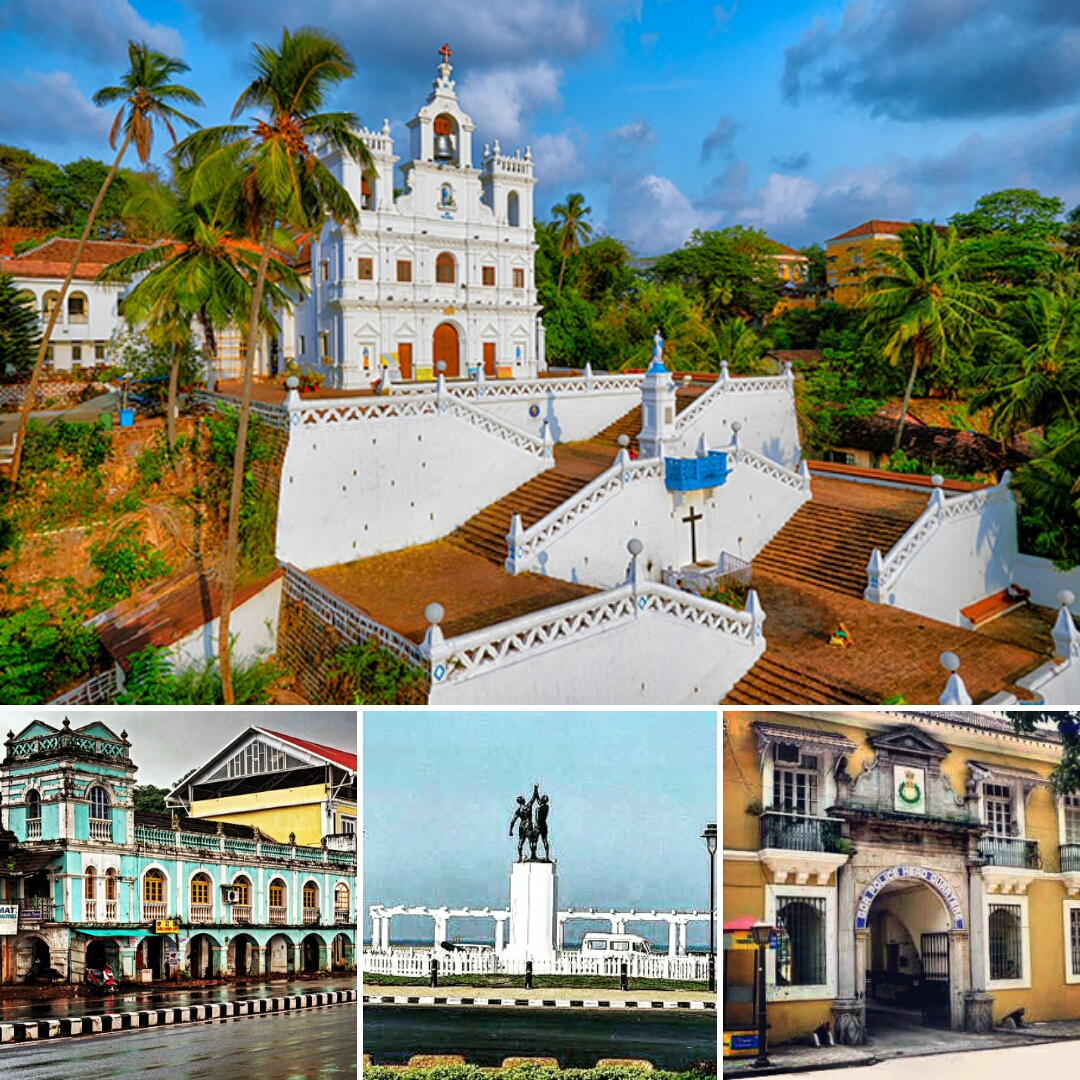
- Visit Panjim City:Panaji is the capital of Goa and the headquarters of the North Goa district. It lies on the banks of the Mandovi River. Panaji means “land that never floods.” The Our Lady of the Immaculate Conception Church is located in the heart of Panaji overlooking the main square known as Praça da Igreja. Colourful villas, cobbled streets and interesting buildings in Panaji give off a Portuguese ambience.
- Visit Old Latin Quarters of Panaji: Fontainhas is an old Latin Quarter in the city of Panaji in Goa. It maintains to this day its Portuguese influence, dotted with narrow streets, well preserved Latin styled villas and buildings, painted in vibrant colours. The quarter shows how Panaji was during the Portuguese rule of Goa.
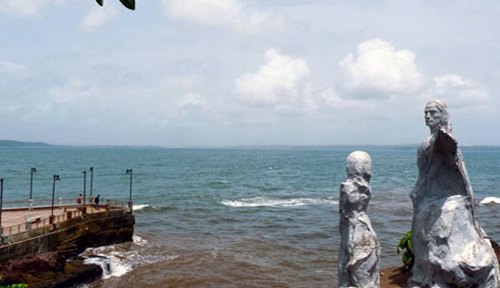
- Visit Dona Paula: Dona-Paula-Beach1Dona Paula was formerly a village, and now a tourist destination, in the suburbs of Panaji, Goa. This idyllic rocky tourist attraction lies at the spot where the Mandovi and the Zuari rivers meet the Arabian Sea. It is easily one of the most popular spots on the itinerary of tourists visiting Goa. Initially the village was called Odavell but was later renamed Dona Paula.Dona Paula was a woman of charity and is known to have helped the villagers and worked a lot for their betterment. So, after her death, the villagers decided to rename the village as Dona Paula. There are various legends surrounding her death, a popular one being she committed suicide after her alleged love affair with a common fisherman Gasper Dias.
- Visit Churches of Old Goa: Se cathedral_goaKnown as the Rome of the East, Old Goa, in North Goa, till today is still regarded as one of Asia’s historical cities dating back to 1510 when the Portuguese built and occupied the city till its abandonment altogether in 1835 after a plague. The Churches in Goa which are set in Baroque style are now under the UNESCO World Heritage list.Among the significant Churches are the Se Cathedral (the seat of the Archbishop of Goa), the Church of St. Francis of Assisi, the Church of St. Cajetan, and notably, the Basilica of Bom Jesus which contains the relics of Saint Francis Xavier.
- Return hotel.
- Dinner & Overnight at Hotel

- Breakfast at the hotel.
- The rest of the time at leisure to relax at the hotel or for independent activities. (With out Transportation & Guide)
- Dinner & Overnight at hotel.

- Breakfast at the hotel.
- The rest of the time at leisure to relax at the hotel or for independent activities. (With out Transportation & Guide)
- Dinner & Overnight at hotel.

• Breakfast at hotel.
• After that its a time to say « Good Bye » and transfer to international airport.
END OF OUR SERVICES