

DAY 1: AHMEDABAD
- Arrive Ahmedabad.
- Upon arrival, Welcome by Our representative and transfer to your hotel.
- Welcome Non-alcoholic welcome drink at hotel.
- Ahmedabad was originally from Karnavati which was founded on the left bank of the Sabarmati River by Karna Solanki between 1063 and 1093 AD. It was reestablished by Ahmed Shah I in 1411 AD on the banks of the Sabarmati River. This city was considered one of the most beautiful cities of India in the 17th century. But in the 18th century, this city went through a period of decline. In the 19th century, industrial strength aroused the city. The Ahmedabad cotton industry has received patronage under its Sultans. The first mill was created by Rancholal Chotalal in 1859, and today there are 80 mills in Ahmedabad. In 1915, Ahmedabad became famous because of the Dandi Mars started by Mahatma Gandhi.
- Overnight at Hotel. (Meals not Included)
DAY 2: AHMEDABAD – POSHINA [190 KMS / 4 HRS APPROX]
• After breakfast and drive towards Poshina and arrive Poshina and check in hotel .
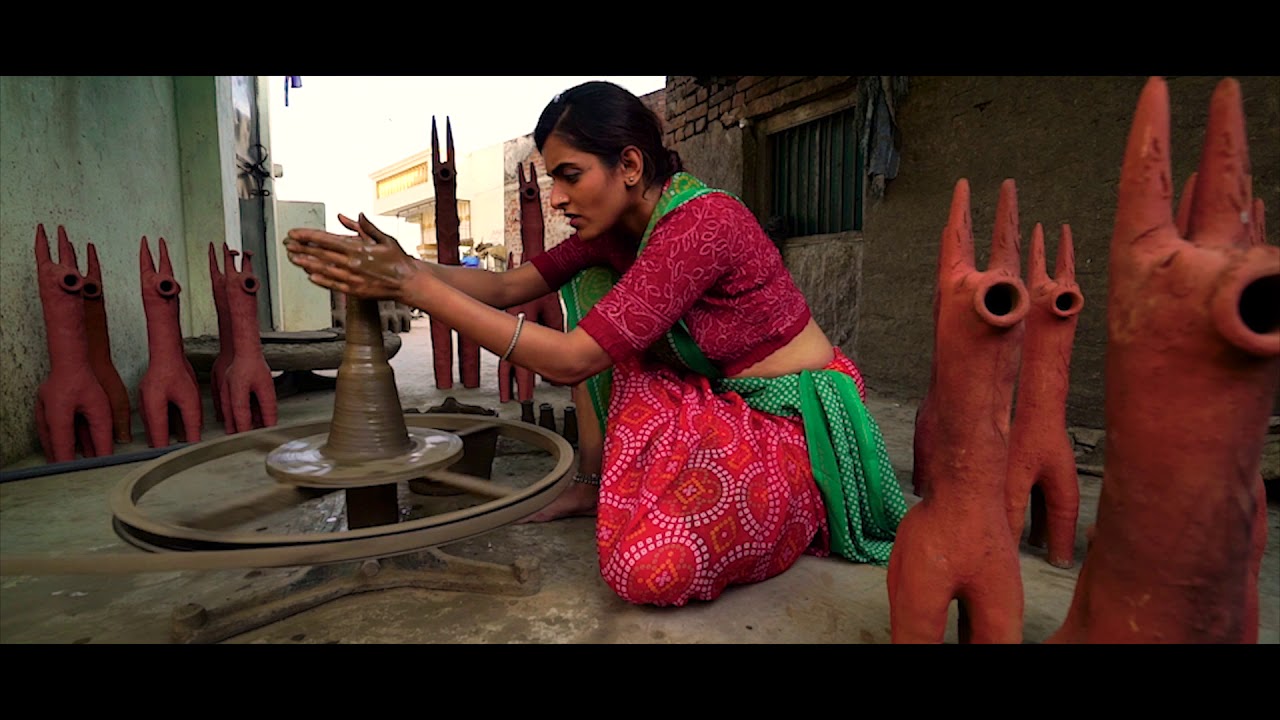
- Later visit the village of Poshina takes a person in the world of the amazing and fantastic conventional life of the village occupied by the bright and colorful communities of tribal people like pastoral Rabaris, Bhils and Garasias. This place, Poshina is home to all tribal temples, one can witness beautiful picture of a thousand terracotta horses forming a straight line to offer their prayers to their local goddess. All the neighboring villages also have fairly similar horses trained in respect to the deity of this goddess. One can get the feel of the original tribal culture by giving the chance to visit the shelters of these potters who are responsible for making the horses on strike.
• Dinner & Overnight at the hotel.

DAY 3: POSHINA – SIDDHPUR – PATAN – MODHERA – BAJANA, PEU RANN DE KUTCH [240 KMS / 5 HRS APPROX]
- After breakfast.
- Visit Sidhpur Road to see the beautiful wooden havelis. Their old havelis and mansions, more than 100 years old, have a distinctly European flavor and a walk through the ‘Bohra Vad’ is like a walk through an England filled with lamp lighters at dusk. They were so enamored with the style and existence of life in 19th century Europe that as a sign of opulence and gaining respectability within the community, they tried to create a slice of Europe in their hometown. This they did by imitating Victorian architecture. The facades are rich in variety and aesthetic expression with intricate wood details. Thus, the living spaces of the Bohra community or the so-called “Bohra havelis” represent a visual straight out of a nostalgic Dickenson novel.
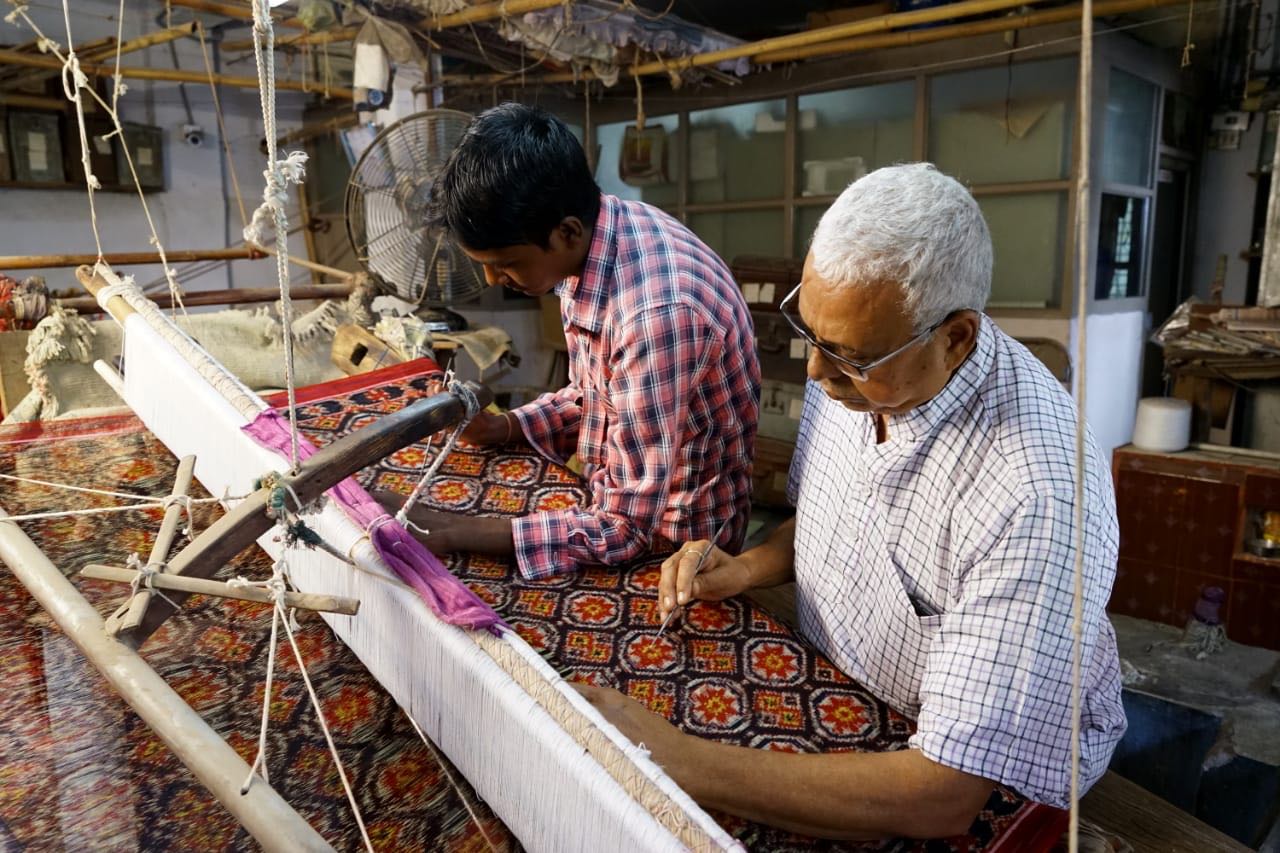
- Later, Patan Patola’s visit of weaving, Patan is famous for weaving patola, the Salvi family is one of them who pursued this traditional art and still preserved today. Patola silk is often called as the queen of all silk. The special technique of handmade silk patola uses the same special technique for weaving raw silk at the end of the patola fabric. The weaver makes the special loom patola and coloring native natural materials. Patola from the Patan region in the North Gujarat region of western India glorify this heritage with its unique jewel like qualities, beautiful colors, design and durability Different colors and patterns match exactly on the horizontal and vertical fillets in weaving. The patola was traditionally woven in a sari length of 5 to 9 yards by 45 “to 54” in width.
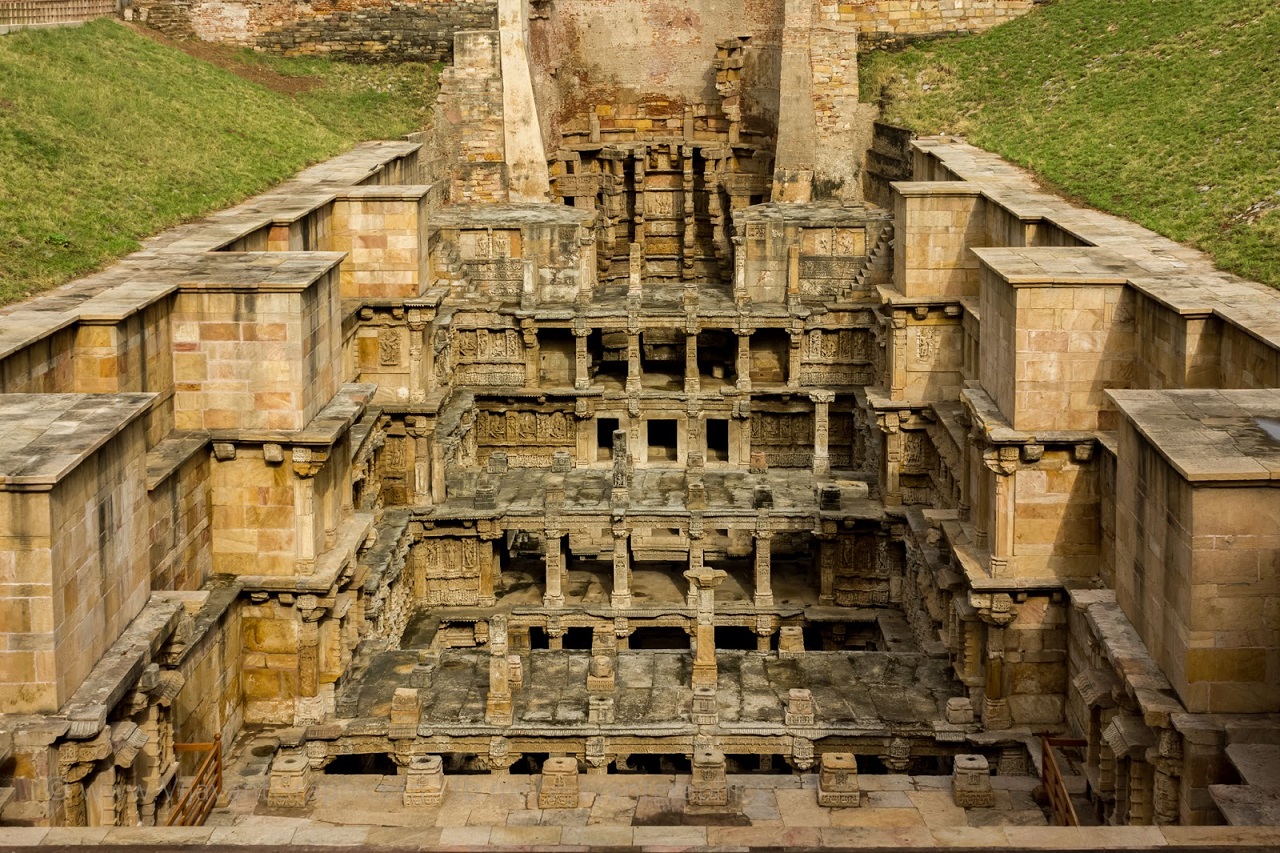
- PATAN – Rani ki Vav (stage well). It was built by Queen Udaymati Bhimdev’s wife during the 11-12 century. It is the most beautiful and spectacular stage and the best example of this architecture for water wells. The Vav measuring about 64 meters. The step is stepped corridor long downhill down into the underground reservoir, it is four pillars. The pillars that support the roof have the castellan base decorated with Ghat Pallavas. It was one of the largest and most sumptuous structure of this type.
- Later, proceeds to visit Modhera Temple of the Sun, Modhera Sun Temple dates bake at the beginning of the 11th century CE and was built by King Bhimdev I in 1026 CE. The Modhera temple is the most important of all the sun temples built in all of Gujarat. The temple is dedicated to the god of the sun. The temple is beautiful and the most beautiful example of Hindu architecture in Gujarat. One of the most striking features of the Modhera Temple of the Sun is that the first ray of the sun falls on the deity at the time of the equinoxes. In front of the temple is a colossal reservoir, which was formerly known as Surya Kund or Rama Kund. The tank features a series of sculpted steps leading down.
- Continue driving Bajana and transfer to the hotel.
- Dinner and overnight at the hotel.

DAY 4: BAJANA
- Breakfast at the Hotel.
- Enjoy morning safari at Little Rann’s Kutch watching the rarest wild asses in the area, followed by safari village in the evening.
- Wild Ass Sanctuary The Sanctuary is well known for its group of stale Asian joke (wild ass), which does not live elsewhere in the Indian lowlands. We can see with Little Rann of Kutch blackbuck (Indian antelope), nilgai or blue bull (the largest antelope of India) and the graceful chinkara (Indian gazelle) are other mammals. The main carnivores of Kutch’s Little Rann are endangered the Indian wolf, desert fox, Indian fox, jackals, desert cats and jungle, and some hyenas; In addition, we can see during visits, pelicans, flamingos, ducks cranes and storks.
- Safari Village We organize safari tours of settlements and pastoral villages along the Kutch Rann. The visit the rural Vadiara and Kharapat Rabaris of Dasada, known for their embroidery, the Canuts colony in Dasada, and the Ambala village of Bharward shepherds and goatherds. The weaving cooperative in Bajana and other artisan workshops can also be included in the tours. Other societies are near Dasada Padhars (PEOPLE mainly fishing), Siddis and semi-nomadic Mirs, Jaths (Muslim breeders), Bajanias.
- Dinner and overnight at the hotel.

DAY 5: BAJANA – AJRAKHPUR – BHUJODI – BHUJ [275 KMS / 5 HRS APPROX]
- Breakfast at Hotel.
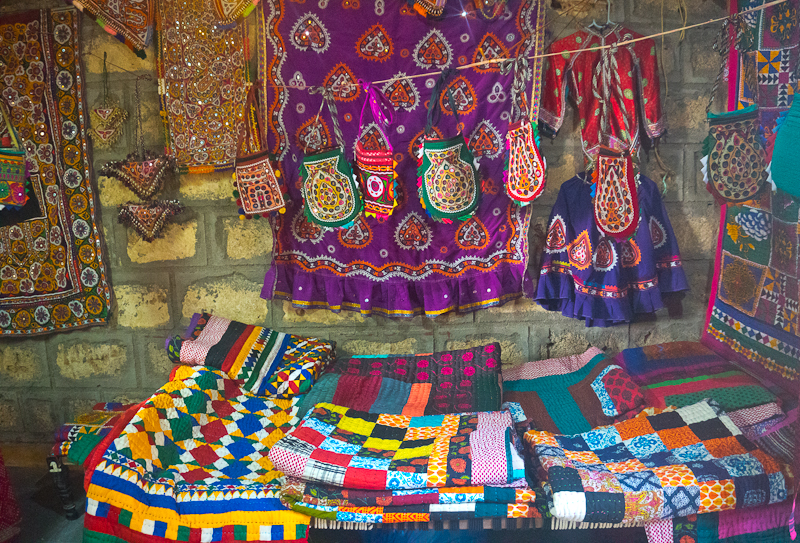
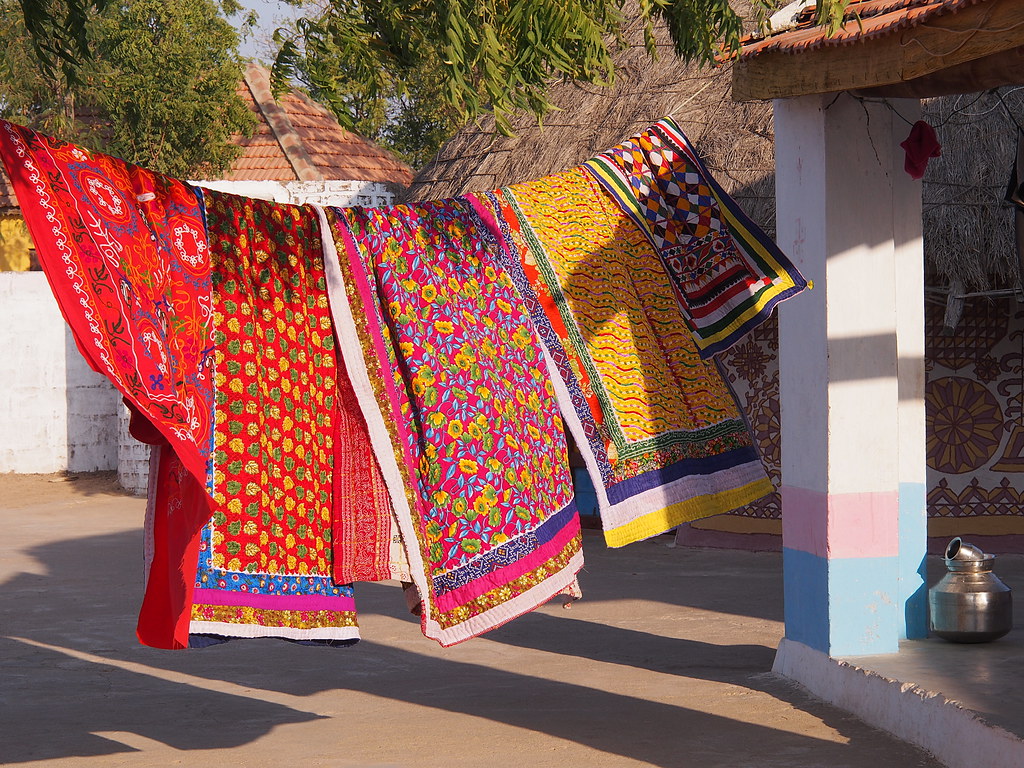
- Visit Ajrakhpur road to see the block printing by tribe, Dhaneti to observe the embroidery by the tribe Ahir and Bhujodi to see the weavers of the Vankar tribe. These block printing villages are home to the famousAjrakh artisans of the region. The latter is far from being Bhuj and was largely destroyed by the earthquake, but there are still great artisans and their workshops to visit there. In Ajrakhpur, not far from Khamir, the famous Dr. Ismail Katri (for most practitioners are Katris), and his sons are friendly and incredibly beautiful impressions. But strolling and meeting other craftmen is a must – there is a great diversity in the craft.
- Later, drive to visit Bhujaodi 10 km offshore Bhuj, artisans weave shawls and thick blankets on pit dug in looms mud houses Crouch (Bhungas) decorated with garomati. The ancient tradition of weaving shawls and thick sheep’s hair covers has come into generations of existence there is essentially a form of barter between the “Rabari” community or the nomadic grazing community and the vankars (weavers) – ” Rabaris brought us sheep’s hair as we made blankets and shawls for them after turning woolen sheep’s hair.
- Continue driving Bhuj, upon arrival transfer to the hotel.
- Dinner and overnight at the hotel.
DAY 6: BHUJ – BANNI VILLAGES – BHUJ [266 Km / 6 Hrs]
- Breakfast at the Hotel.
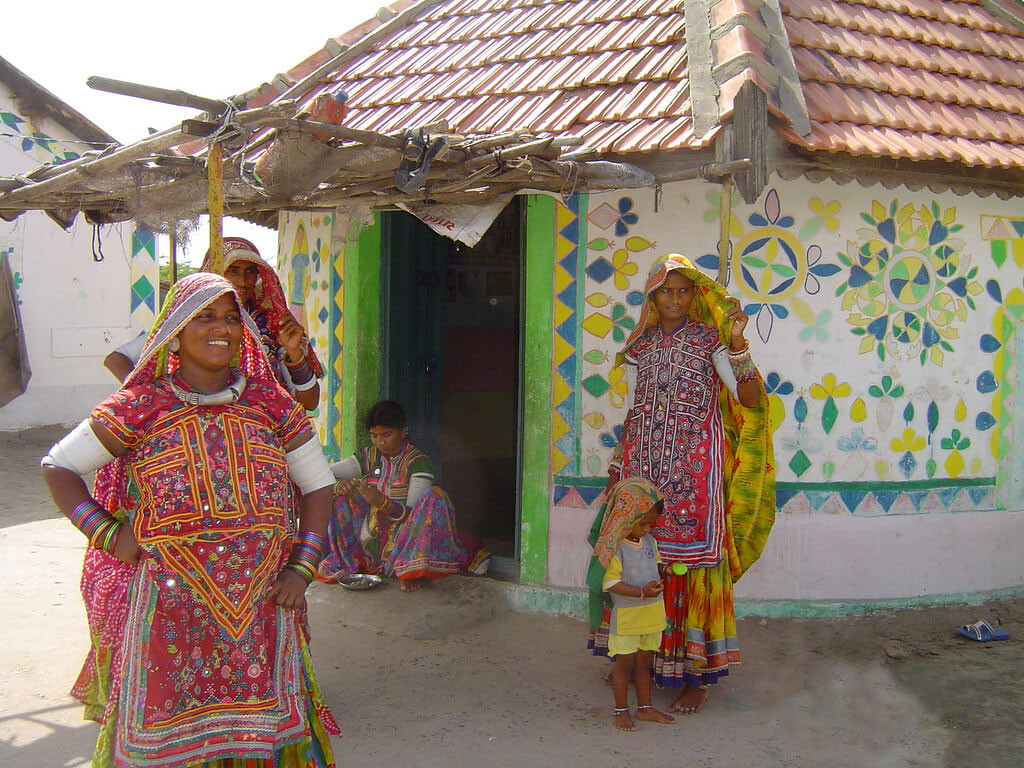
- Visit Banni Village are en route allowed (Please any customer needs to obtain the permit). To see different people like Jat, Harijan, Meghawal and Mutva etc in various villages like Hodka, Ludiya and Dhordo. Banned means “a village group”. InBanni area of Kutch the Meghwal-Harijans who emigrated from Rajasthan use Khambira, Kharek, Kudi Stiches in their embroidery. also define the embroidery and satin area and a very minute mirror models similar to the famous Mutwa embroidery of the region. They make wall hangings, vests and sachets in Kharek Stich and make “Moti Bharat” or beading on fans, bracelets, toys and belts. After visiting Hodka village – Hodka derives from the Gujarati word “Hodi’which means” boat “. Since then, the villages here are called jheels, where drinking water is available.
- Hodka is famous for its fine work of embroidery and mud as much as leather craftsmanship. Men and women actively participate in the development of the tradition of art and crafts of the region.
- Visit Ludiya Harijans and Muslims are main communities in this village. The main professions are: monsoon farming, cattle breeding, complex wood carving, complex embroidery work, mud work and mural painting to decorate homes. Harijan men are involved in wood carving, women take embroidery and wall decoration. DHORDO visits to see beautiful traditional mud houses (Bhungas) with mirror work and its fine Mutwa embroidery with tiny mirrors.
- Dinner and overnight at the hotel.


DAY 7: BHUJ – GONDAL [275 KMS / 6 HRS APPROX]
- After breakfast visit Kutch Museum (closed Wednesdays and public holidays)
- The Kutch Museum, formerly known as the Fergusson Museum, was founded by Maharao Khengarji III in 1877 AD. This museum was built by the state engineer Sir Ferguson, and so named after him. This museum remained a private exhibition for the Maharaos until independence and was renamed the Kutch Museum. The Kutch Museum is the oldest museum in Gujarat. This museum is built in Italian style and located in a picturesque setting on the shores of Lake Hamirsar. The museum has a large collection of Kshatrapa inscriptions, archaeological artefacts, weapons and specimens of various handicrafts from the Kutch region.
- Visit Aina Mahal Palace (Closed on Thursday and public holidays). was built by Rao Lakhpatji in 1750 AD. Aina Mahal is a part of a large palace complex. It is a two-story building with Darbar Hall, room of mirrors and suites for the royal family. In the 18th century, Rao Lakhpatji sent a local craftsman Ramsingh Malam to Europe to perfect his skills in glassware, enameling, tile making and iron foundation. After going back, he built the Mahal Aina with the Venetian glass mirror room. The mirror room has white marble walls that are covered with mirrors and gilded ornaments and the floor is tiled. The design and decoration of Aina Mahal was due to the efficiency of Ramsingh Malam. The platform above ground is surrounded by a series of fountains operated by an elaborate system of pumps below a Venetian chandelier.
- Prag Mahal was built by Rao Pragmalji II (1838-1876 AD). Rao Pragmalji has appointed a renowned architect, Colonel Henry Saint Wilkins to Prag Mahal Design, who previously designed Deccan College, Sasoon Hospital, Ohel David Synagogue. Prag Mahal took about 10 years to build at the cost of 20 lakh rupees.
- Afternoon proceeds to Gondal, upon arrival transfer to the hotel.
- Dinner and overnight at the hotel.


DAY 8: GONDAL – JUNAGADH – SASANGIR [120 KMS / 3 HRS APPROX]
- After breakfast.
- Visit The Royal Garages have an extensive collection of vintage and classic cars 1910-1955, limousine and 1950 and 1960 sports cars, American cars from 1940 and 1950, and a fleet of four-wheel drive vehicles from World War II and after period of war. Most of these cars are restored and some carry the original Gondal State license plates.
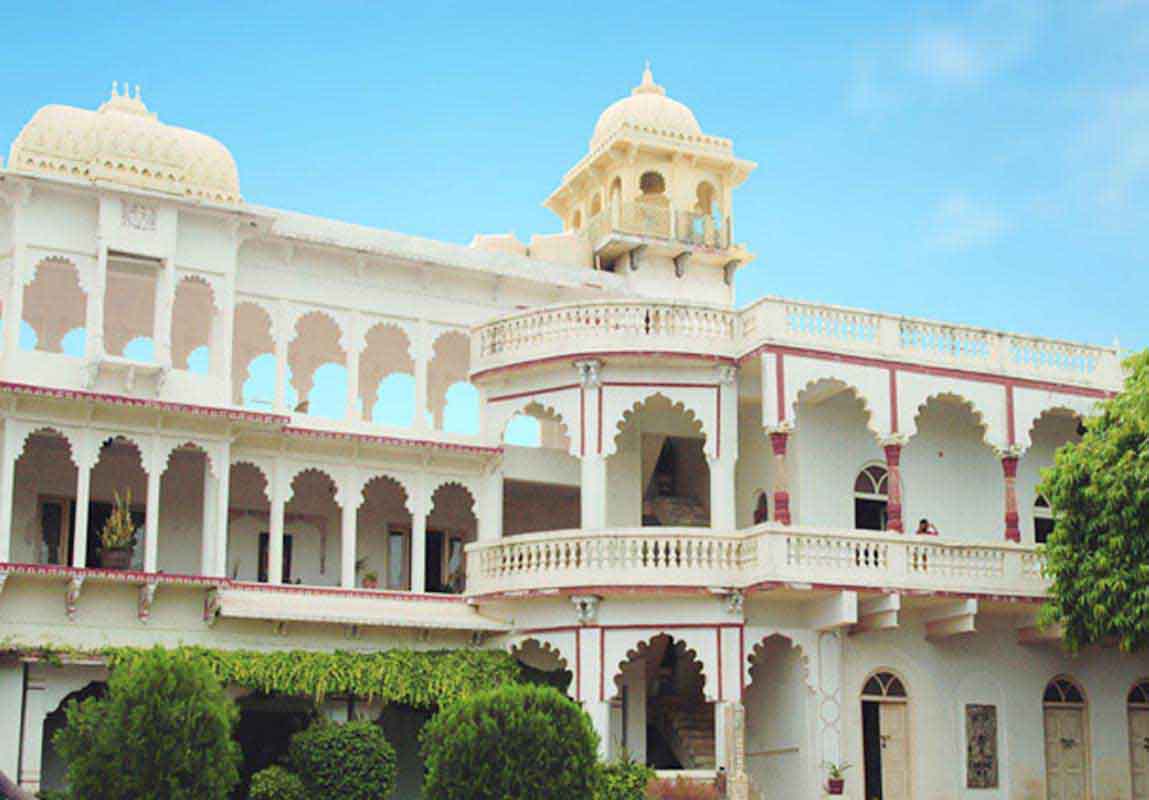
- Naulakha Darbargadh Palace was built in the 17th century. This palace is one of the oldest and most beautiful palace Gondal. This palace is located on the banks of the river on a masonry base, a large rise of about 30 meters above the riverbed. This palace was built in about nine lakhs and so named. The palace is approached by the grand entrance gate with the clock tower on the city side. The entrance leads to a large open space with administrative blocks to the right and a grand staircase to the far left corner that leads to the finely carved pavilions on the open terrace. There are stone carvings with exquisite balconies.
- Bhuvaneswari Ayurvedics belongs to a family of Ayurvedic doctors, which has a traditional history of more than 250 years. They also export and manufacture Ayurvedic medicines. All medicines are prepared in the traditional method using advanced equipment under the supervision of our Ayurvedic doctors.
- Later, proceeds to Junagadh is one of the most historic cities of India – ancient artifacts were found on the citadel perched on a hill, the edicts of Emperor Asoka (closed on Wednesdays and holidays) were Listed on the rock here in the 3rd century BC and Buddhist caves all serve to ratify the antiquity of the city. Formerly the capital of Gujarat under the Kshattrapa dynasty, later ruled the Chudasama Rajputs of the city from 875 AD.
- Once in Junagadh visit the Uparkot Citadel – unfolded in 1472, 1683 and 1880 – which lies on a small plateau east of the city and the Jama Masjid in its center that was built from the remains of a palace Hindu. It is also interesting the 11th century Adi Chadi stage well Vav, or Baoli, with its 172 steps and beautiful spiral staircase. After visiting the fort, drive down to see the impressive mausoleum complex of the latest Junagadh rulers – the flamboyant Maqbara and features Baha-ud-din Bhar complex carvings.
- Continue driving Sasangir and transfer to the hotel. Safari Party at Sasangir (Before Permission – Safari’s license to Sasangir is 100% successful online only through the online window will be open 90 days prior to the tour this day.)
- Sasan Gir Lion sanctuary houses some 400 as well as Asian Lions. Sasan Gir is only in the outside world continent where lion can be seen in its natural habitat. Gir Wild Life Sanctuary is the last refuge of Asian lions in India and the lion population living in the park is just over 300. The entire area of coverage of the Gir Sanctuary is about 560 square miles (1,450-sq. km). Gir is not just the Lions, The second most common predator in the Gir is Leopard. Infect, Gir National Park is also one of the largest Leopard populations in a park in India, and especially in the warmer season, they can sometimes be seen at night near the lodges. there the residents of the Gir National Park animals are Sambar Deer, Chital Spotted Deer, Nilgai Antelope, Chowsingha Antelope Tetracenter, Chinkara Gazelle, Wild Boar, Langur Monkey, Jackal and Hyena and many birds such as Chitrec, Eagle Bonneli, Crested Serpent eagle, Woodpeckers Flamingo etc. fought 10, 000 years ago lions spanned vast sections of the globe, but as the human population began to increase, the trees were cut down and the forests were cleared to make more land for people to live. We now only have small fractions in some parts of the world. And Asian lions, a separate subspecies of African lions are perhaps found 100,000 years ago, in the Gir Wildlife Sanctuary.
- Dinner and overnight at the hotel.

DAY 9: SASANGIR – SOMNATH – [UAI 140 KMS / 3 HRS APPROX]
- Breakfast at Hotel.
- AM game rolls to Sasangir. (Before the authorization – Safari’s license to Sasangir is 100% online only The online window will open 90 days before the visit date).
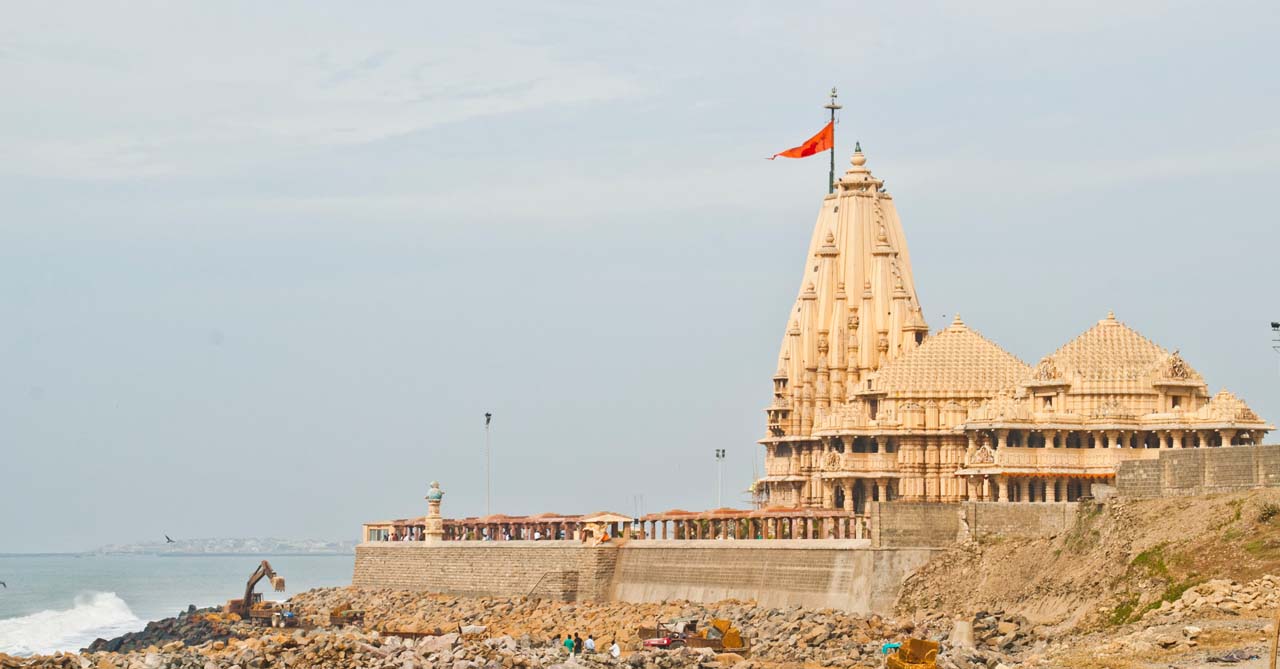
- Later drive to Diu Somnath Temple Road Tour – A shiva temple lord known as Jyotirling built by God Moon.
- Continue driving Diu and transfer to the hotel.
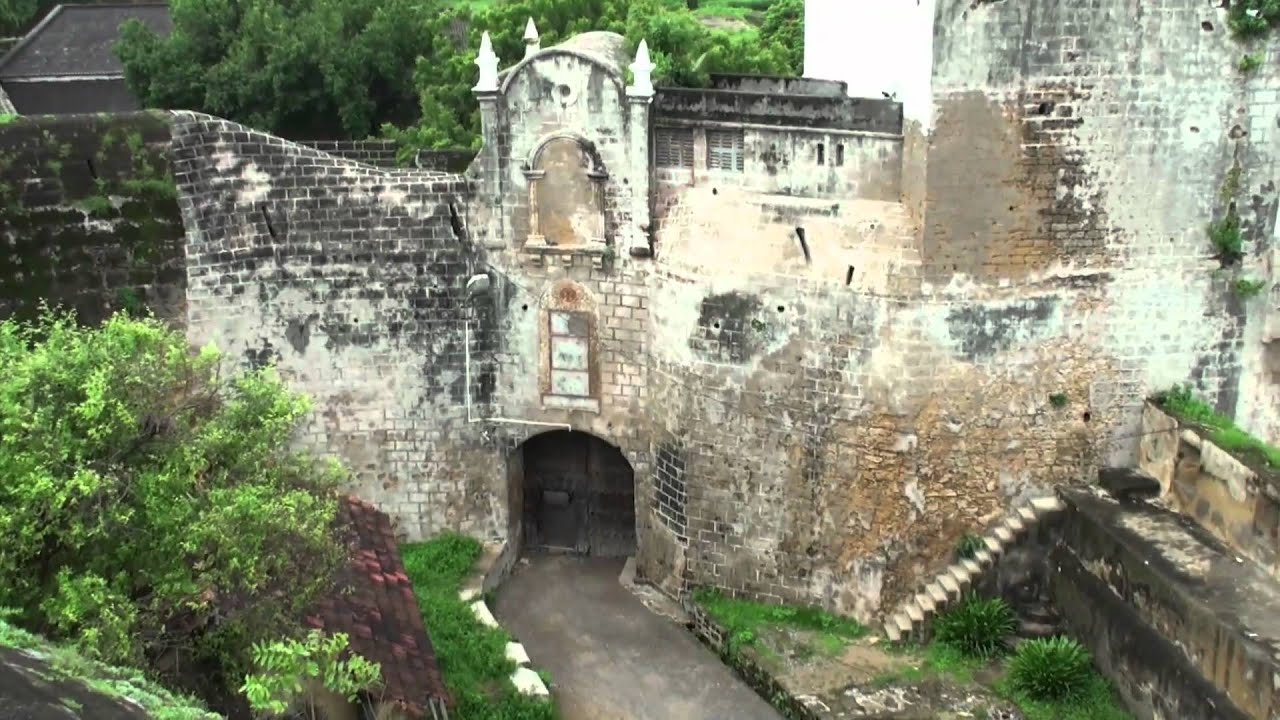
- Diu: A beautiful mixture of sun, sand and sea, is a God-given Diule to those in search of a blessed land where the weary weight of this unintelligible world can, for a time, be comforted and soul waking up can hear the music of nature. This small island of the breeze, the beauty and serenity located off the southern tip of the Saurashtra Peninsula (Kathiawad) of Gujarat, bathed by the Arabian Sea, is a picture of calm with stunning beaches and a history fascinating. Diu has been judged by many well-known kings and dynasties during prehistoric, ancient and medieval times. It was a Portuguese colony until 1961. It is now a territory of the Union, separated from Goa in 1987.It was a major trading post and naval base where the leaders controlled the shipping routes in the northern part of the Arabian Sea between the 14th and 16th centuries.
- In the afternoon, you go on to visit the Church of St. Paul, Diu Fort and Markets. St. Paul’s Church – St. Paul’s Church is dedicated to Our Lady of the Immaculate Conception. The construction of the church began in 1601 and was completed in 1610. The main facade of the church is perhaps the most complex of all the Portuguese churches in India. The facade was illuminated by flood lights. The church adorned with intricately carved scrollwork and shell-like motifs and the magnificent woodcarving is considered to be the most elaborate of all the Portuguese churches in India. St. Paul’s Church, built in 1691 is dedicated to Our Lady of the Immaculate.Conception. In the architectural style, it resembles the church of Bom Jesus in Goa. The dominant features are, without a doubt, Gothic.
- Diu Fort: It is a vast and imposing structure, located on the coast of the island. The fort commands a magnificent view of the sea. It was built between 1535 and 1541 AD. The fort is bordered by the sea on all three sides. On the fort stands a giant Light House. Several cannons still look threateningly from above. The main front wall is to have five large windows with stone galleries.
- The Fort has been illuminated, creating a breathtaking view at night. Strong and soft, fierce but loving. The majestic structure stands on the UAI coast as a sentinel. Once inside, you are overwhelmed by the gaunt majesty of the ancient stone work that transports you to a past era of timeless brave soldiers.
- Dinner and overnight at the hotel.
DAY 10: UAI – Palitana [160 KMS / 4 HRS APPROX]
- Breakfast at the Hotel.
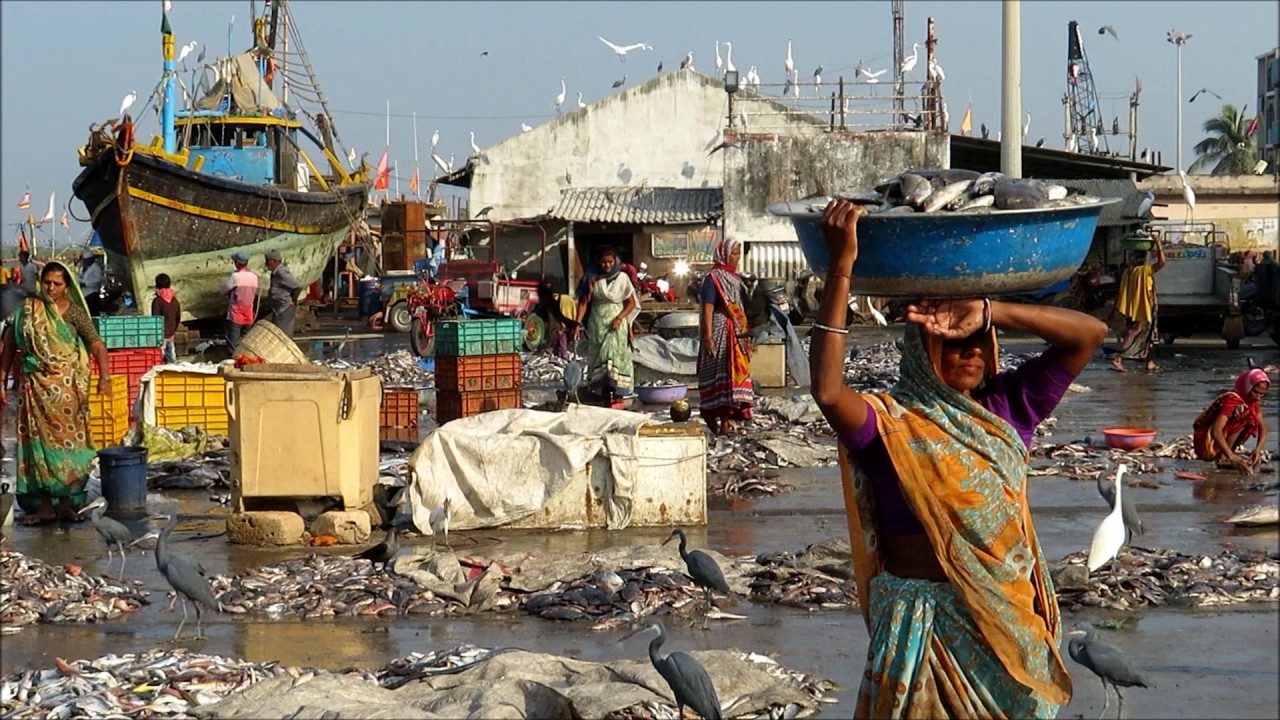
- Visit fishing village – Vanank Bara.
- The western end of Diu seems even quieter than the east side, and the Vanakbara village has an endlessly fascinating fishing port, near both a wooded area and a coconut plantation, with a fort and the Church of Our Lady of Mercy. From here you can see the village of Kotdhla on the coast of Gujarat, and ferries sailing between Kotdhla and Vanakbara at regular intervals, whenever the boats fill up. Officially it means six times a day, ten minutes on foot and. Sea urchins run and rummage among fishermen with hints and duck dashes between reckless feet. Excited women and children pour out on the pier from one end of the little boat and the men wait obediently last unit.
- Continue driving Palitana and transfer to the hotel.
- Dinner and overnight at the hotel.

DAY 11: PALITANA – LOTHAL – AHMEDABAD [250 KMS / 6 HRS APPROX]
- Breakfast at Hotel.
- Very early this morning, you may want to join the pilgrims and climb Palitana which is located 60 km from Bhavnagar. The Palitana Hills are known as the “Abode of the Gods” and are covered with 863 Jain temples covering a period of over 900 years. Their finely carved spiers and towers twinkle in the sunlight as pilgrims make the journey on foot up. The climb will take about two hours in each direction so you do not carry water and a sun hat with you.
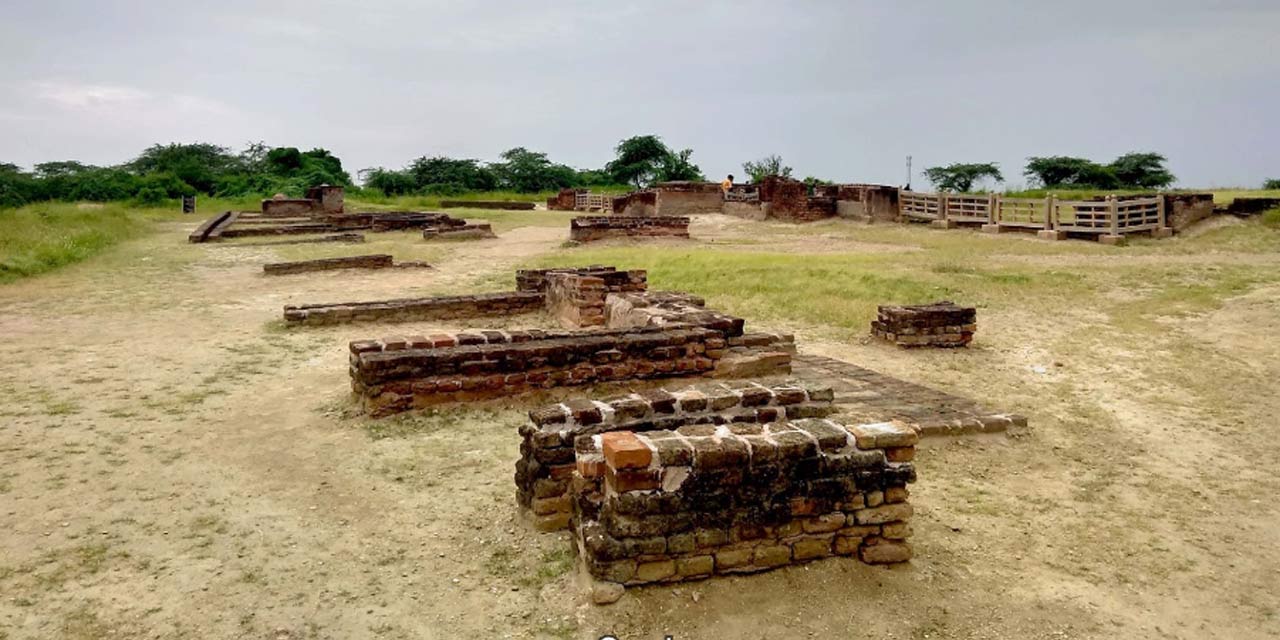
- Later drive to Ahmedabad, en route to visit Lothal (closed on Friday and public holidays) is one of the most important cities of the ancient Civilization of the Indus Valley, located in the Bhalde region of the modern stateGujarātet dating from 3700 BC Discovered in 1954, Lothal was searched from 13 February 1955 to 19 May 1960 by the Archaeological Survey of India (ASI), the official Indian government agency for the preservation of ancient monuments. Lothal de Dock connected earlier connected -The world of the city to an ancient course of the Sabarmatiriviere on the commercial routebetreHarappanvillesSindhet the peninsula of Saurash tral wherethe peripheral Kutch desert of today was a part of lamer of Oman. It was a vital and prosperous trading center in ancient times, with its trade of precious stones, stones and precious ornaments to reach the most remote corners of West Asia and Africa. The techniques and tools they have for pioneering pearl manufacturing and metallurgy have stood the test of time for over 4000 years.
- Continue driving Ahmedabad and transfer to the hotel.
- Dinner and overnight at the hotel.


DAY 12: AHMEDABAD SIGHTSEEING & DEPARTURE
- Wake up early morning and Visit Ahmedabad Heritage walk.
- Breakfast on foot (07:30 am to 1000 hours).
- The Ahmedabad Heritage Walk is a two and a half hour guided walk. This daily business by the AMC is extremely well-designed in terms of guidance and cooperation with CRUTA and Swaminarayan Trust, by a being operationalized group of young volunteers. There is also a half-hour of special slide show running through the pages of unfolding its birth back from a 10th century AD from the history of the ancient city site known as Ashaval to the current fortified city refounded during the Ahmedshah period and the following years.
- The walk starts from the picturesque Swaminarayan Mandir in Kalupur and ends in the most glorious architectural heritages of the Jumma Ma sjid, covering among the many pols, havelis, decorative facades, artisans’ workplaces and the number of magnificent Hindu temples and jains. proceeded from Kavi Dalpatram Chowk – which housed the great 19th century Gujarati poet – in Lambeshwar nor Poles, the classic reminders of the textile era of the city – theCalico Dome in the century old Kala Ramji Mandir the Haja Patel ni Pole with a unique idol of Lord Rama in the dark color and in a sitting posture.
- A special feature of Ahmedabad is the plan of the old city, including many pols, self-contained neighborhoods, sheltering a large number of people, traversed by narrow streets, usually ending in squares with community wells and chabutaras to feed the birds.
- The walk moving through Doshiwada ni Pol, Zaveri Vad to Chaumukhji ni Pol saw temples adorned with their fascinating wooden carvings hidden under simple exteriors camouflaged under the aura of Mughal dominance and lanes punctuated with intriguing chabutras (bird feeders). birds) to a three-foot wide walkway leading into old Harkunvar Shethani Ni Haveli.
- Moving through the historic Fernandez Bridge took us to Manek Chowk where amidst the deafening traffic and full of parked vehicles Rajesh told us the legend of Manek Baba after the Chowk was named and the Manek Baba Mandir on the site where he declined and went into a bottle to show his magical powers to Ahmed Shah, the founder of the city. “Heritage is the soul of the city,” Ms.Parker notes, as we entered Rani pas Hajiro through Badshah not hajiro, eventually leading to the magnanimous Jama Masjid.
- Mosquee Sidi Sayed, Built in 1573, is one of the most famous mosques of Ahmedabad. The mosque is fully operated. The mosque has ten screen windows (jails) on the side and rear arches.
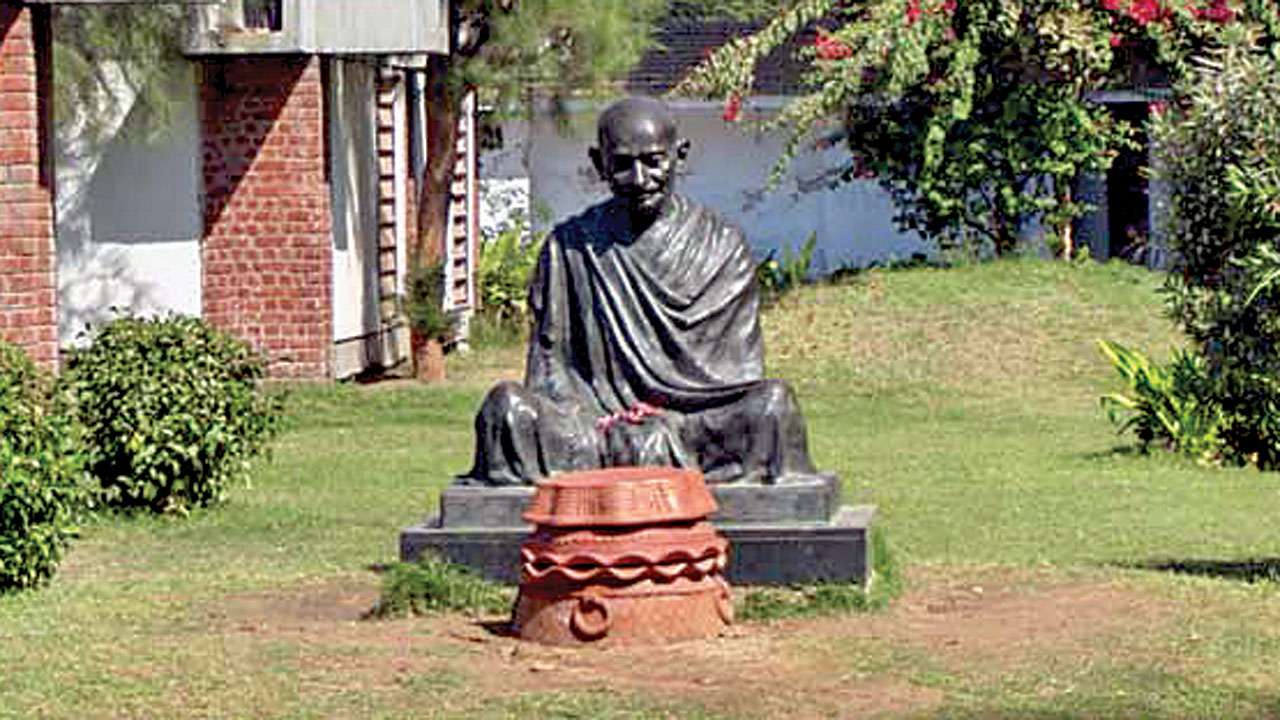
- Gandhi Ashram known as “Ashram Harijan” or “Ashram Sabarmati” because it is located on the Sabarmati River. The beautiful Ahmedabad Ashram complex, with shady trees populated by thousands of parakeets, beaters, hummingbirds, squirrels, offers shelter in the noisy streets of the city and is one of Ahmedabad’s most important tourist attractions. This ashram was Gandhi’s quarterbacks during the long struggle for Indian independence. His ashram was founded in 1915 and still makes crafts, handmade paper and spinning wheels.
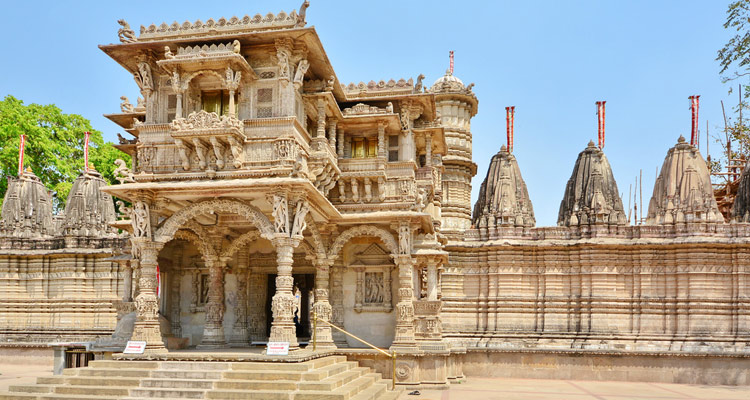
- Hathee Singh Jain Temple is located just outside the Delhi Gate, in the north of the old city. This Jain Temple was built in 1850 by a wealthy Jain merchant and is one of the best ornated Jain temples in Ahmedabad. This temple is dedicated to Dharamanath, the 15th Jain Tirthankar. This temple is built of pure white marble and profusely decorated with rich sculptures.
- Dada Harir Stepwell was built in 1499 by a woman from Sultan Begara’s harem. This wav has no lower platforms, ending at a small octagonal well. The depths are cool, even on the hottest day. Neglected and often worn dry, it is a fascinating place.
- Adalaj is about 17 km away. North of Ahmedabad. The Baoli or stage well at Adalaj Vav is one of the finest steps in India. Queen Rudabai built this property in 1499 to provide the traveler with a cool and pleasant hideaway from the summer heat. A long staircase descends to the water. It has three entrances leading to a huge platform that rests on 16 columns, with angles marked by chapels. Carved pillars and richly cross beams create open spaces and four floors that are quite striking. The octagonal well is five stories deep. The Baoli is decorated with exquisite stone carvings, the subjects range from eroticism to buttermilk.
- Transfer to the airport to take international flight. END OF OUR SERVICES